
Comparative Study of Accreditation Standards in Engineering
An Analysis between the European Framework EUR-ACE® and the Argentine System
DOI:
https://doi.org/10.64876/radi.v27.1Keywords:
engineering, accreditation, EUR-ACE, comparative standardsç, engineering education, international mobility, quality assurance, accreditation agency, Europe, ArgentinaAbstract
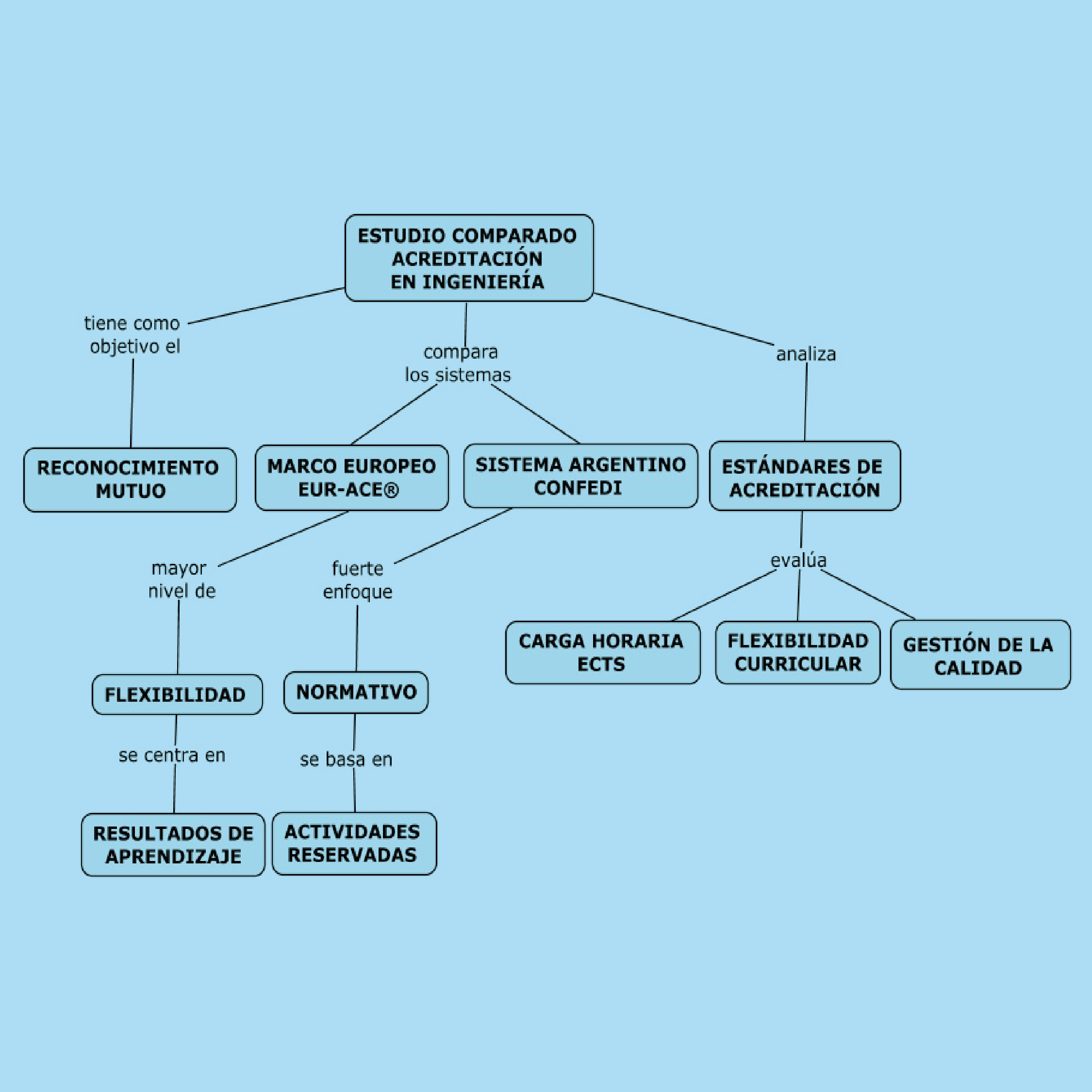
This article develops a comparative study between the accreditation standards of engineering in Argentina and the European framework EUR-ACE®, with the purpose of analyzing their degree of convergence and the possibilities of strategic alignment to strengthen educational quality and professional mobility. Based on the documentary analysis of normative frameworks and technical guides of both systems, six central dimensions are examined: curricular structure, workload, skills, learning outcomes, teaching and evaluation processes, quality management and international recognition. The results show a high correspondence in technical and transversal training, although significant differences persist in curricular flexibility, modularization and mechanisms of mutual recognition of degrees. The study concludes that the progressive harmonization between the two models represents a strategic opportunity to consolidate a shared culture of quality and promote international academic integration in the field of engineering.
Downloads
References
Argentina.gob.ar. (s.f.). Por primera vez los médicos argentinos tienen garantizada la validez de su título en todo el mundo. https://www.argentina.gob.ar/noticias/por-primera-vez-los-medicos-argentinos-tienen-garantizada-la-validez-de-su-titulo-en-todo-el
Bowen, G. A. (2009). Document analysis as a qualitative research method. Qualitative Research Journal, 9(2), 27-40. https://doi.org/10.3316/QRJ0902027
CONEAU. (2021-2025). Acreditación de carreras | Carreras de grado. Comisión Nacional de Evaluación y Acreditación Universitaria. https://www.coneau.gob.ar/coneau/acreditacion-de-carreras/carreras-de-grado/normativa-y-procedimiento/
Consejo Federal de Decanos de Ingeniería (CONFEDI). (2018). Libro Rojo de CONFEDI: Estándares de Segunda Generación para Ingeniería. https://confedi.org.ar/download/documentos_confedi/LIBRO-ROJO-DE-CONFEDI-Estandares-de-Segunda-Generacion-para-Ingenieria-2018-VFPublicada.pdf
ENAEE. (2021). EUR-ACE® framework standards and guidelines. European Network for Accreditation of Engineering Education. https://www.enaee.eu/wp-content/uploads/2022/03/EAFSG-04112021-English-1-1.pdf
European Association for Quality Assurance in Higher Education (ENQA). (2015). Standards and Guidelines for Quality Assurance in the European Higher Education Area (ESG). Brussels: ENQA.
European Parliament and Council. (2008). Recommendation on the European Qualifications Framework for Lifelong Learning (EQF).
Ministerio de Educación. (2018, 18 de mayo). Resolución 1254/2018. Actividades profesionales reservadas a los títulos de Ingeniero/a. Boletín Oficial de la República Argentina. https://www.boletinoficial.gob.ar/detalleAviso/primera/183989/20180518
Ministerio de capital humano secretaría de educación. (2025, 5 de mayo). Resolución 556/2025 (RESOL-2025-556-APN-SE#MCH). Boletín Oficial de la República Argentina. Recuperado de https://www.argentina.gob.ar/normativa/nacional/resoluci%C3%B3n-556-2025-412332
Ministerio de Educación (2023, 15 de noviembre). Resolución 25/97/2023 (RESOL-2023-2597-APN-ME). Boletín Oficial de la República Argentina. Recuperado de https://www.boletinoficial.gov.ar/detalleAviso/primera/298712/20231121
Downloads
Published
How to Cite
Issue
Section
License

This work is licensed under a Creative Commons Attribution-NonCommercial-ShareAlike 4.0 International License.